
How will the future bikes change with 3D printing
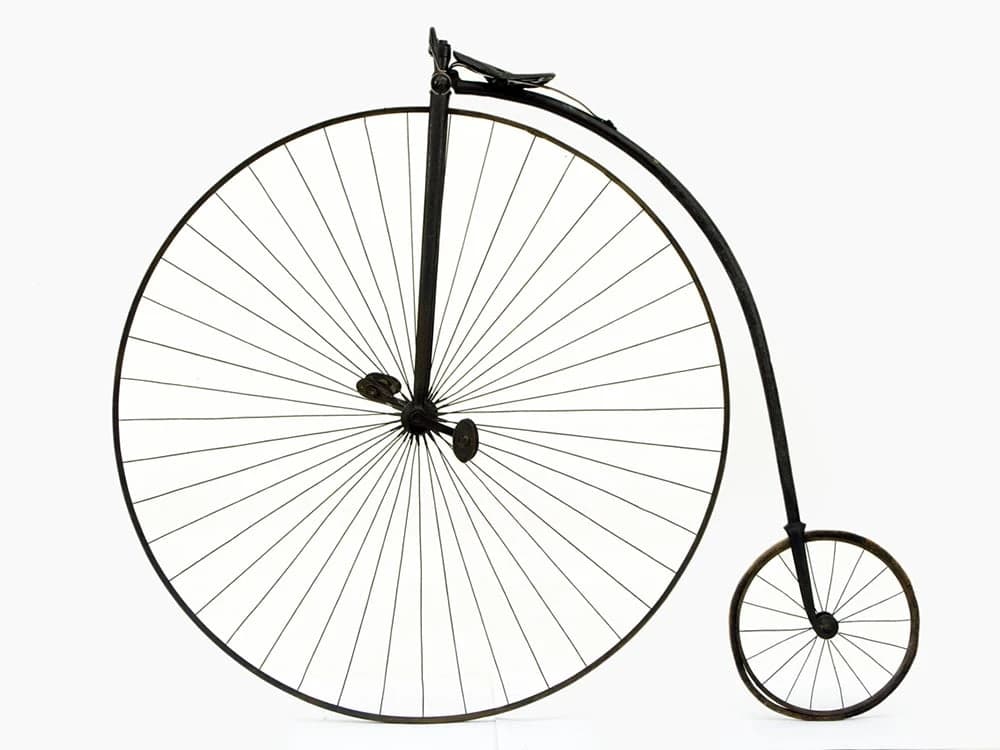
The continued innovation of the Additive Manufacturing processes has the potential to improve and personalize the production of many components of bicycles. The question is therefore absolutely legitimate: how will they change in the future - or perhaps in the present - these means of transport popular for about 200 years now? Let's take a step back… the development of the first prototypes of bicycles, similar to the current ones, began in the second half of the nineteenth century. We are talking about the “bicycle”, the famous model used by the nobles, with the rear wheel much larger than the front one.
Racing BicycleIn about two centuries of development of this means of transport, the changes made have been numerous, up to the complete modification of almost all the components. City bike - Racing bike - Mountain Bike, muscle bikes - electric - assisted, the models available to choose from are endless, based on the paths and the effort you are willing to bear. Is progress about to end? Not at all! Credit goes all to the innovative technologies currently available, capable of creating elements with particular geometries and increasingly light and performing materials. 3D printing in particular, thanks to its production flexibility, has all the potential to revolutionize the production of many components of bicycles, aiming at the mass production of custom parts. But, which components are we talking about? Below you will find some, carefully selected to introduce you to the different 3D printing technologies.
Puncture-proof tires - FDM technology
Made in a single piece with the BigRep ONE 3D printer, these tubeless tires were designed by the Italian product designer Marco Mattia Cristofori. The material used, called PRO FLEX, is an innovative thermoplastic elastomer very resistant to high temperatures. Its performance characteristics of elongation (470%) and hardness (98 Shore A) make it ideal for this type of application. https://www.youtube.com/watch?time_continue=3&v=9pHJNtH8ltQ
The improvements?
Since it has no inner tube, the rubber can't puncture, thus avoiding the classic unpleasant situations of a puncture during a nice bike ride! The first 3D printed prototypes have found a good market response, even if, for the moment, these tires are still in the testing phase.
Carbon crank - CFF technology
No more just plastic. The American company Markforged has in fact created a series of 3D printers capable of making parts in composite materials, reinforced with continuous Carbon, Glass or Kevlar fibers. This patented technology is ideal for producing cranks with a very high mechanical resistance, such that they can be mounted on a bicycle and used every day. For rotating parts subject to wear, such as the bottom bracket, metal inserts are provided to prevent wear over time.
Carbon crankThe improvements?
The possibility of choosing the quantity and the orientation of the Carbon Fiber to insert inside the crank allows to optimize the consumption of material, significantly lightening the part. The crank made with 3D printing in fact weighs about ⅓ compared to the same, made of aluminum.
Grips for downhill - SLS technology
Extreme biking is often the cause of more or less serious injuries. The slight modification of the geometry of some elements and, even better, their personalization can lead to a better feeling of the athletes. The company NIRI Grips for example has exploited the advantages of SLS technology (sintering of Nylon powders) for the production of custom grips able to absorb vibrations and offer a greater grip. https://www.youtube.com/watch?time_continue=11&v=_qg28TJNOhY
The improvements?
So far, the traditional rubber grips have only had the function of preventing the hands from slipping down from the handlebar. The customized NIRI grips instead can be adapted according to weight, experience and driving conditions (type of terrain, slope...): it is possible to choose a unique solution, tailor-made for each person.
NIRI gripsUltra-light flat pedal - MJF technology
The increasingly performing materials that are developed every day allow the creation of not only prototypes, but also finished parts directly usable. Many bicycle components that have so far been produced exclusively in steel or aluminum, can be made of Nylon PA12, a very versatile and resistant material.
Flat pedalThe improvements?
The possibility of avoiding the construction of support structures allows extreme geometric freedom. The pedals, lightened with particular grooves, can be 3D printed in one piece (no longer in two parts and then glued as with traditional FDM processes) avoiding a big point of weakness in the central area. For a better grip on the pedals, dedicated titanium pins are inserted.
Bike & 3D Printing = eco-compatibility
Not to underestimate, another fundamental aspect of 3D printing: the possibility of creating custom parts using local manufacturers. There are in fact numerous online sites (Thingiverse, GrabCAD..) with real libraries from which it is possible to download the models to be 3D printed. Do you have a 3D printer at your home? In a few hours you will have your component in your hands, at the cost of the material used only. If instead you prefer to trust the experts, you can turn to the Italian company Manufat that offers 3D printing service with a wide range of materials. This is a first step towards modern localization of production. By producing the parts on site in fact, you would drastically reduce the number of products that are shipped every day from one part of the globe to another.
The result?
The creation of customized products is another strength of additive technologies: especially when it comes to sports equipment, the possibility of having a grip, a pedal, a knee pad designed ad hoc is definitely more effective than a generic one. Customized mass production is an increasingly current and achievable concept.
About Manufat
Manufat is a young company that has operated in the 3D printing sector since 2014. “We believe that innovative technologies can revolutionize the production processes of companies in every sector. Our goal is to show the solutions offered by 3D printing, in a completely new way” Sam Bianchi Bazzi - CEO at Manufat
Article by Manufat




 France
 277km
277km


 6 days